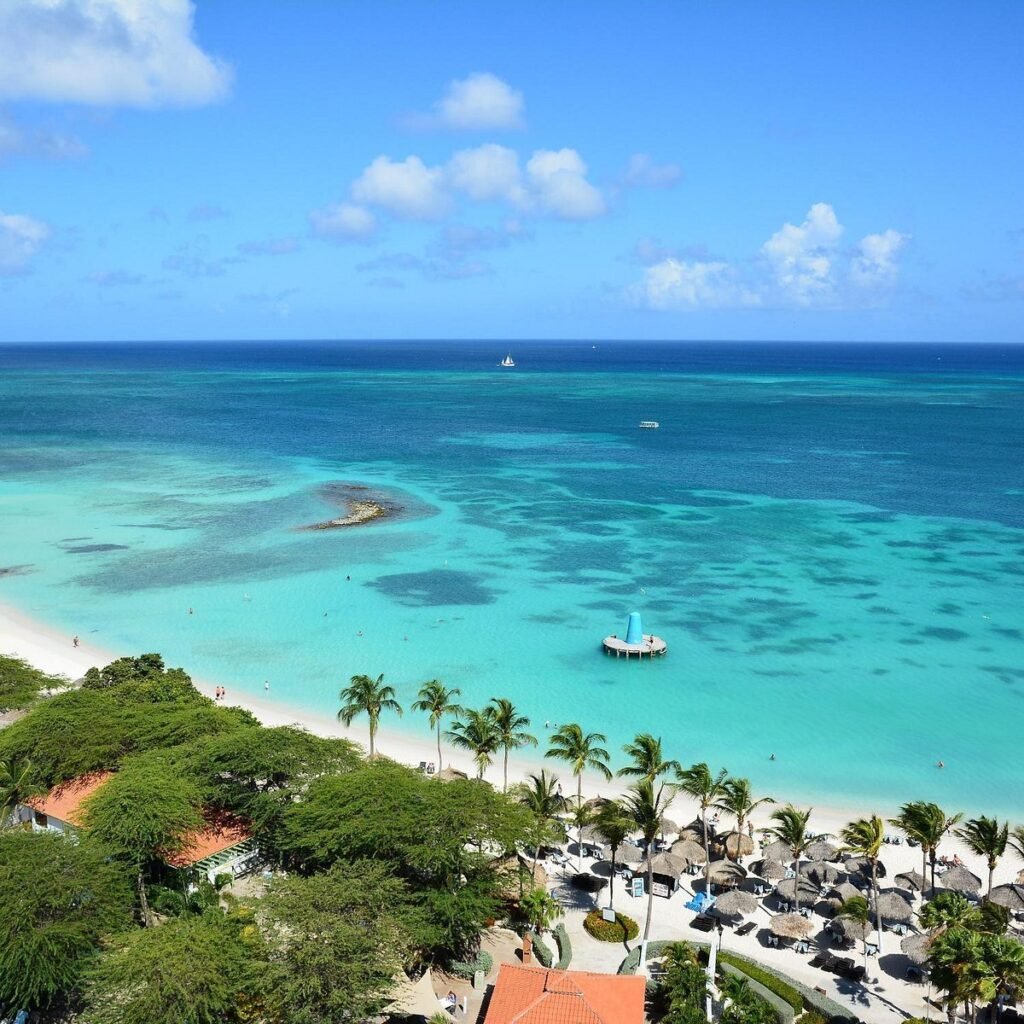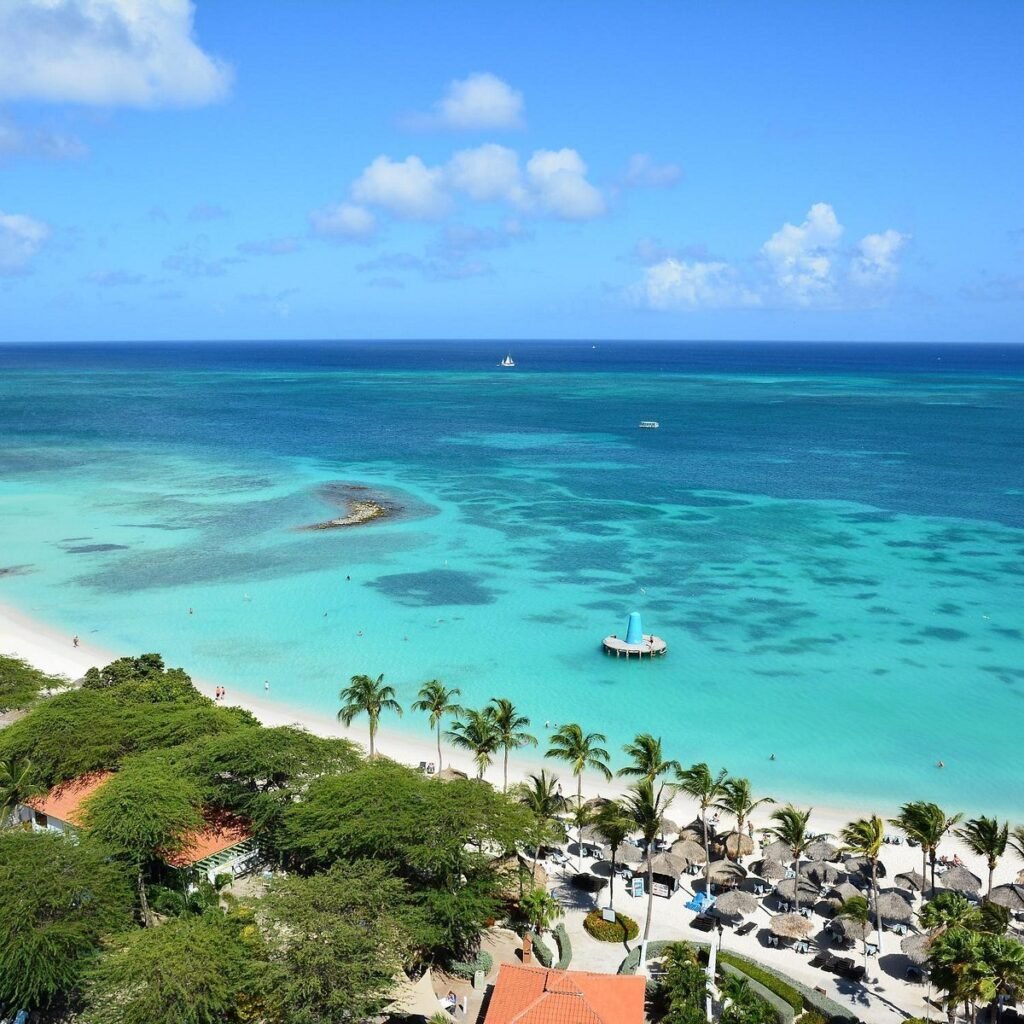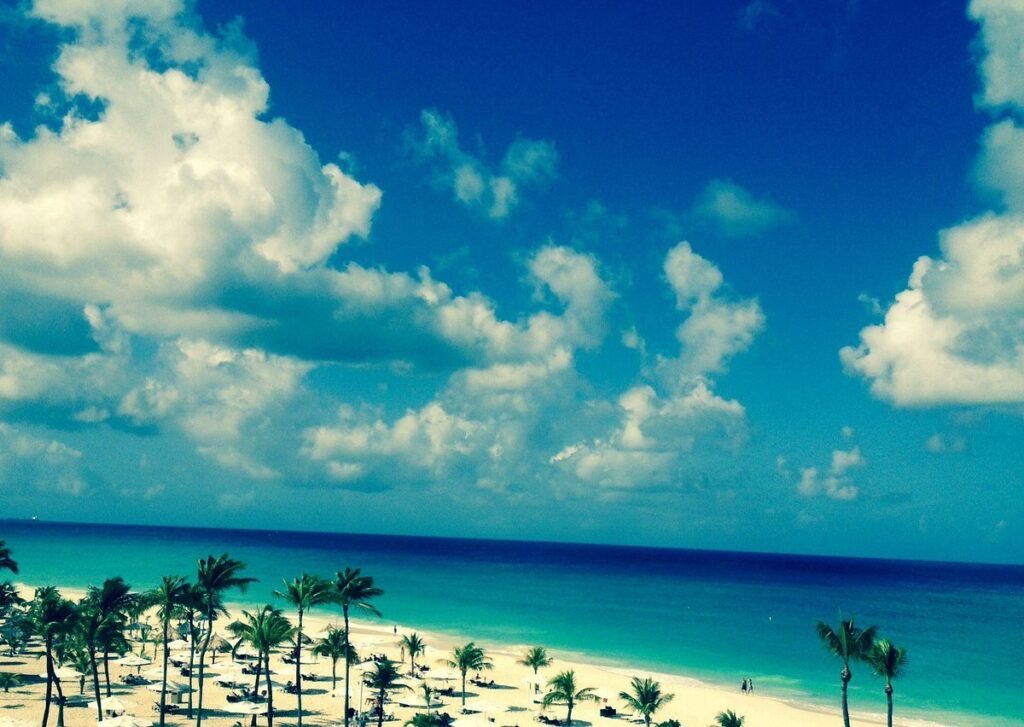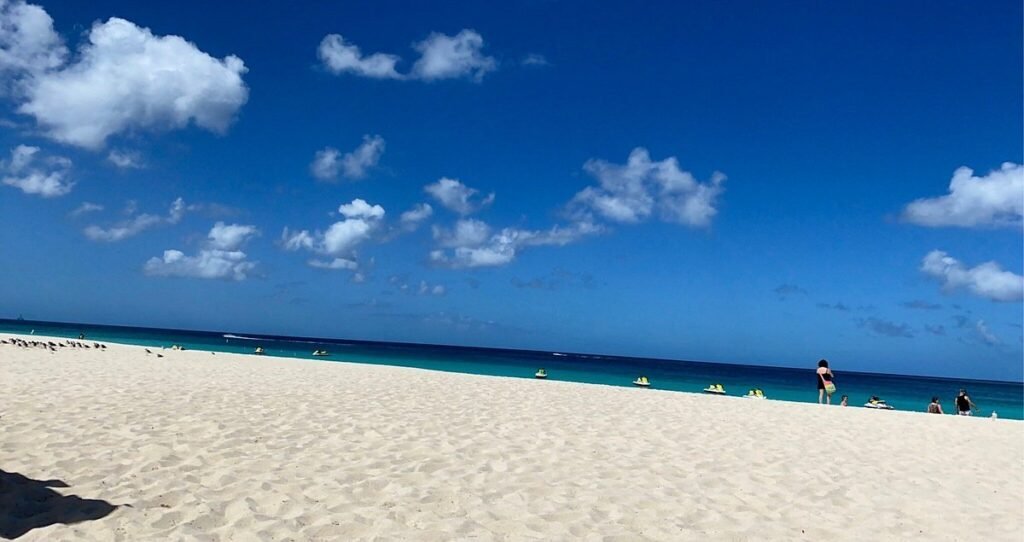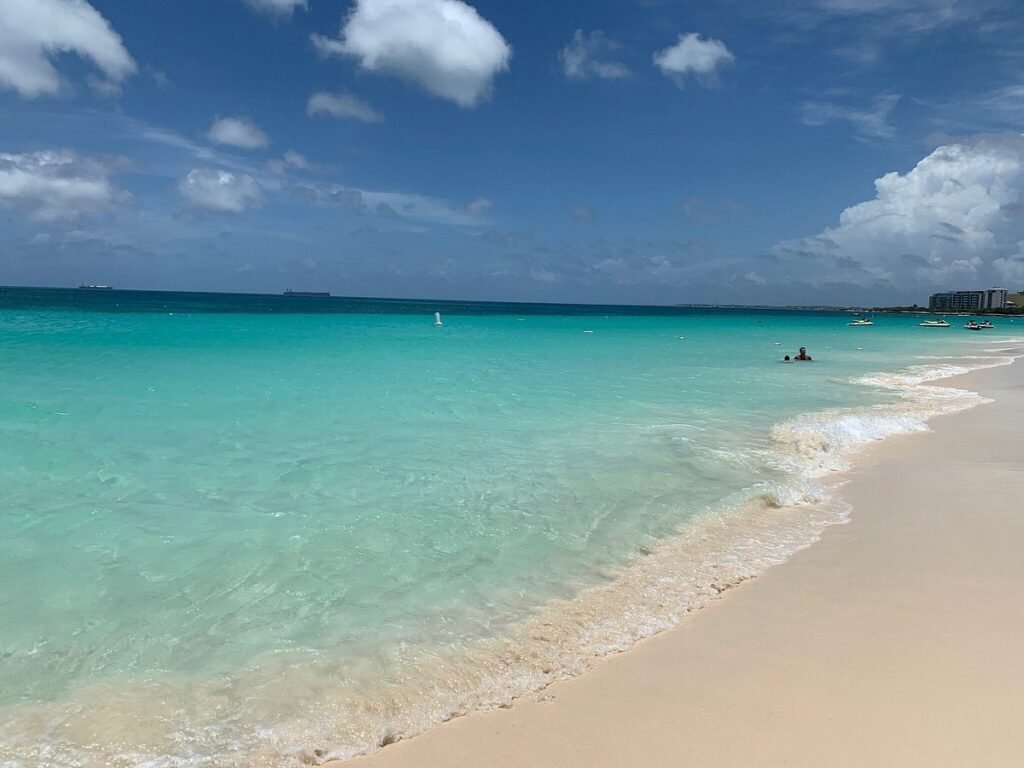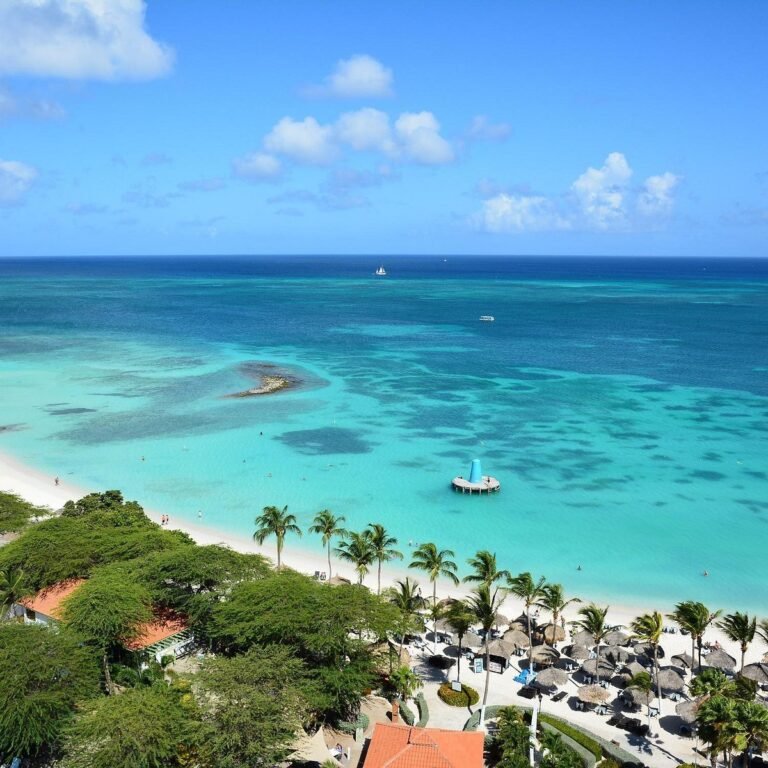
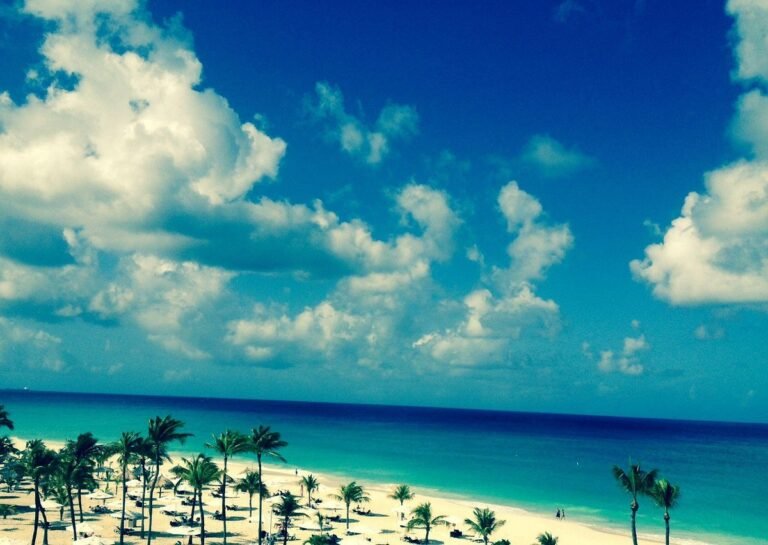
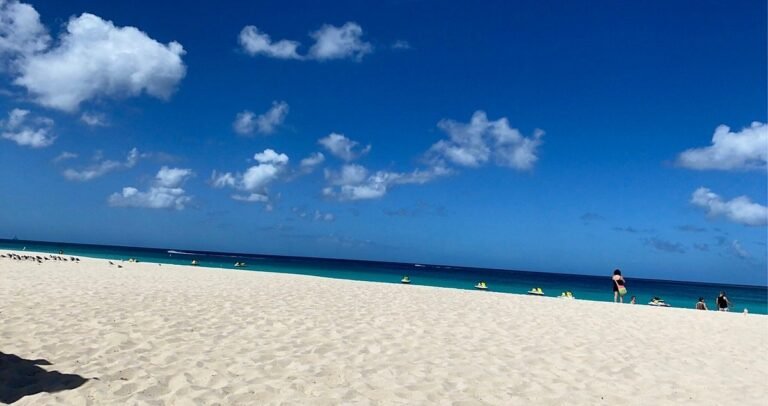
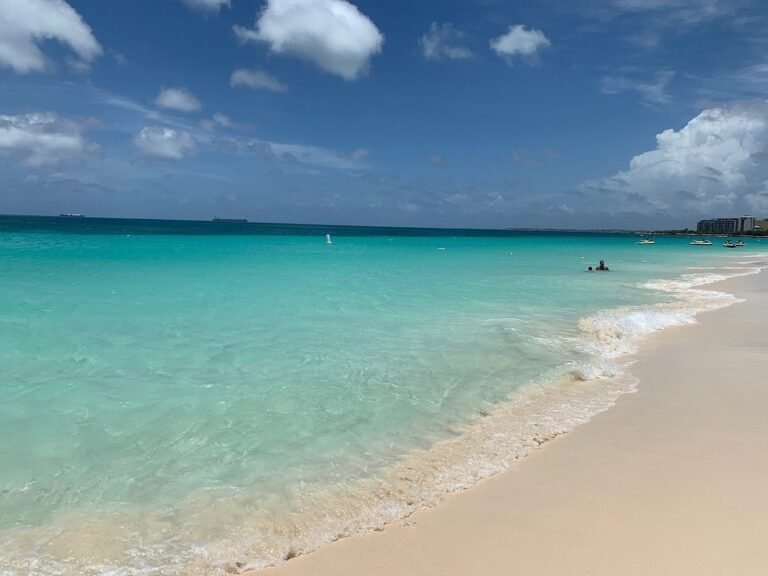
Eagle Beach is one of Aruba’s broadest stretches of white sand, with clear Caribbean water, open sunset views and the island’s most recognizable fofoti trees. The extra width gives beachgoers more room to spread out than on many resort beaches, while the low-rise hotel area remains close by.
Planning your Eagle Beach visit
- Best time: Arrive in the morning for easier parking, cooler sand and a better chance of finding shade or an available beach hut. Late afternoon is ideal for sunset.
- Access: The beach is public, with multiple roadside access points and parking along the low-rise hotel corridor.
- What to bring: Pack drinking water and sun protection. Natural shade is limited, and beach huts can fill early.
- Water: The west-coast water is often suitable for swimming, but conditions can change. Check the shoreline before entering and keep children close.
Protect the beach
Eagle Beach is an important sea-turtle nesting area. Never touch markers, nests, hatchlings or adult turtles; keep a respectful distance, avoid flash photography at night and follow instructions from local conservation teams. The famous fofoti trees are living landmarks—enjoy and photograph them without climbing, tying items to them or disturbing their roots.
Explore nearby
For a quieter continuation of the same low-rise coast, see Manchebo Beach. For restaurants, piers and a busier resort atmosphere, compare Palm Beach. Review our Aruba beach safety guide before choosing a swimming or snorkelling location.